How to Develop an Apprentice
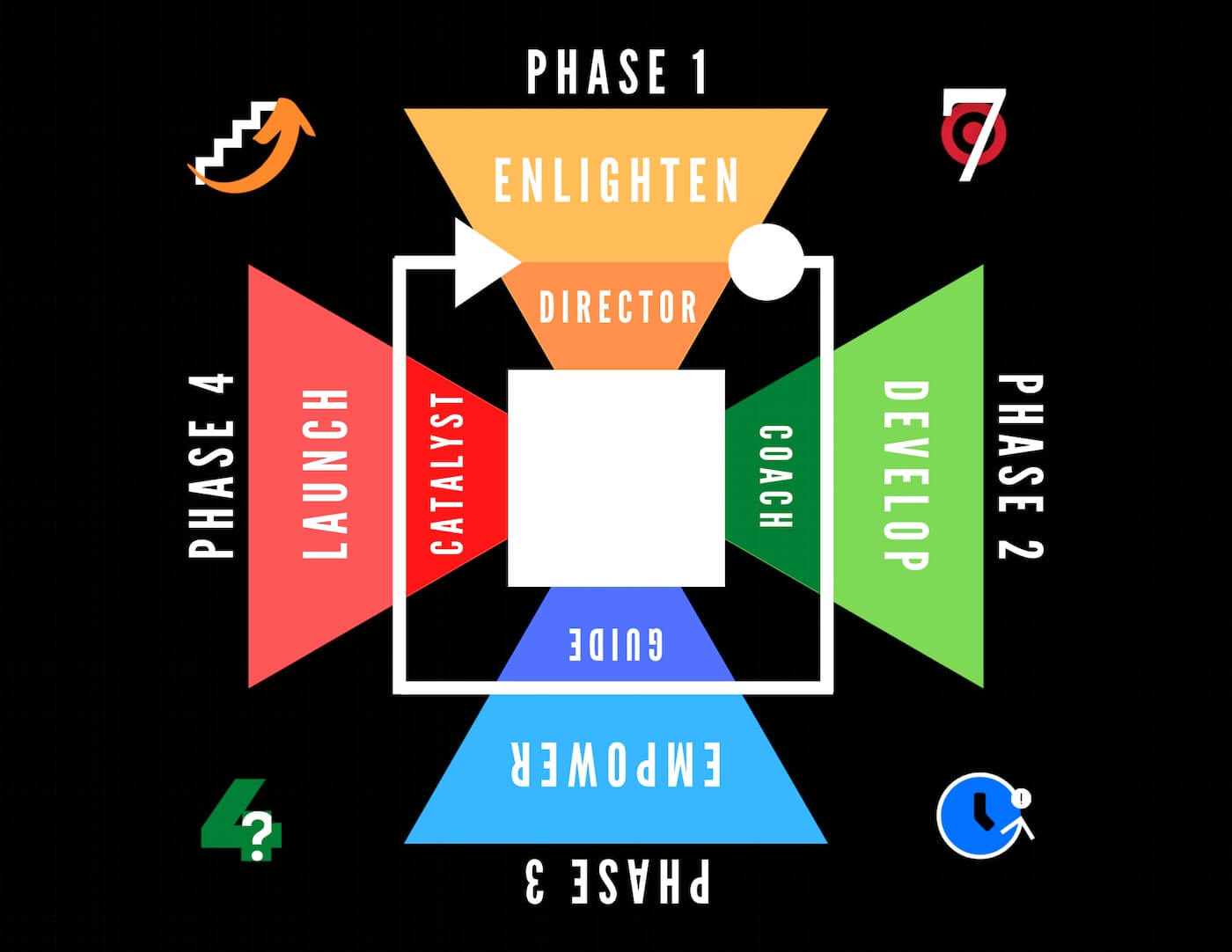
So how do you develop an apprentice once they have said yes? Well, I am glad you asked! This is a framework I call the Coach's playbook. In all development, there are four phases, four types of leadership a coach needs to bring to the table, and four anchor activities that should be at the heart of each phase.
Phase 1: Enlighten Phase
Every Apprentice is unconsciously incompetent at their new role. They don't know what they don't know. So leaders must act as a Director. Telling them what they need to do and showing them how to do it. This is the easiest phase of Development. It's easy for us to show and tell. At the heart of this Phase is the anchor action I call the "Core 7". You need to make a list and description of the 7 core practices a person would do to get an "A-" at the role you are leading. I believe in every role there are only 7 practices, sometimes less, and very rarely more. Write them down and make them clear. This is the playbook for your new apprentice.
Phase 2: Develop Phase
This is the hardest longest, and least rewarding phase of the Process. Most leaders abandon their apprentices in this phase thinking being a Director is enough, but at this point, you must become the Coach. You must help them begin to accomplish the activities in a proficient manner.
As a Basketball coach, I taught the fundamentals early and often, no matter how good my players get. I help them with their technique, and I adjust their form in shooting a basketball. This is the phase you help them become proficient, but it's slow and arduous. They are consciously incompetent at this point. I implement a regular meeting called "Playback Time." We take a moment, and ask what was the one lesson that resonated with or challenged you most? Then we unpack that. We don't give advice. We ask questions about it, and let them give us the answers they need to give because they already have the answers inside them. So Playback time looks like this:
- Recognize: What lesson or situation stood out to you?
- Observe: Tell me about the details of the situation–what happened, how did you feel, what was going on around you?
- Reflect: Take a moment to reflect on your inner world when concentrating on that moment, how is your body, what emotions do you have? Is there any wisdom coming to your mind?
- Plan: What can you do next time to make this situation a more positive experience. (it doesn't have to be a negative situation or lesson)
- Accountability: Who is a peer that can help support you that you can tell about your plan?
- Act: Execute your plan.
This simple exercise when done regularly will be the single most crucial piece to becoming a competent leader. This will be your time to become a trusted advisor in the lives of your apprentices.
Phase 3: Empower Phase
This Phase is called the Empower phase because that is what you will begin doing. You will empower your leaders as they become more competent. In fact, You will see their growth before they do. They won't know they are ready, and so your role is to become the guide in the empowered phase, and we do this by asking the Four Questions:
1. What did we do well?
2. What Was Confusing?
3. What was Missing?
4. How would you teach this activity to another person?
You are teaching them to lead, and to think about why they are doing what they are doing, not just the what or the how. When they understand the why, and are consistently competent, they are ready for Phase 4.
Phase 4: Launch Phase
This is the most fun phase for You the leader, and the most nerve-wracking for the apprentice. You become the Catalyst to your apprentice's success. In this Phase, you launch your Apprentice to become the Hero. You don't just leave after you tell them you are ready. This is a common misconception. Jesus didn't model that. He gave them his power and authority by imparting to them His Spirit. So you must accomplish the same type of thing by practicing the Platform Plan. The Platform Plan is a checklist of sorts, and it helps you launch them into a stronger trajectory than you were. Here is the Platform Plan.
- Relationships: Gift your Apprentice with a relationship or relationships they will need to continue to be successful that they couldn't reach on their own.
- Credibility: Let them ride on your credibility until they have established their own. The easiest way is not just being a "reference" but making the introductions for them.
- Access: Get them into the places they can't go, but you can. Help them get access to the time, financial, spiritual, intellectual, or relational capital they need to be successful from the start.
- Audience: Give them access to your community. This might be the hardest for leaders, especially in the church, but you see this pattern with John the Baptist, who prepared the way for Jesus. A Modern example is Chuck Smith of the Jesus Movement and Calvary Chapel. He gave his apprentices access.
When you have done these things, it's time to go. It's to push them out of the nest and they will fly. Just think of the expanded impact you can have if you become what Dave Ferguson and Warren Bird call a Hero Maker! God is calling us to infinitely more impact than most of us think is possible, but it will take giving up being the Hero, and becoming the Hero Maker. Are you up for it?
Chestly Lunday is highly regarded as an international speaker, coach, and consultant helping people defeat futility in life and the workplace. Having given over 1000 unique presentations, he has worked with denominations like the Southern Baptist Convention, The Assemblies of God, the Christian Reformed Church, and The Reformed Church in America as well as multiple businesses. Chestly has over a decade of developing leaders from all walks of life. Chestly is on the cutting edge of innovation in the religious non- profit sector, co-founding Digital Church Network, training and connecting Digital Church leaders all around the world. Chestly’s insights help leaders facing the prospect of irrelevance in their ministries by helping them build a cohesive strategy around digital community and discipleship.