Disciple Making Drift: How Speed Reshaped Our Expectations of Spiritual Growth

We expect fruit faster than formation allows.
The church has learned to think in short timeframes. Eight-week sermon series. Six-month small groups. One-year leadership tracks. Bounded experiences help people enter, participate, and move on. They’re efficient. They’re manageable. And they fit the pace of modern life.
Even when we talk about disciple making, speed is often baked into the imagination. Make a disciple, and six months later you both make disciples. Two becomes four. Four becomes eight. Eight becomes sixteen. The math is compelling. The logic is clean. And the promise of rapid multiplication is hard to resist.
But formation doesn’t move at the speed of spreadsheets.
Spiritual growth is rarely linear. It doesn’t follow predictable timelines. It unfolds unevenly, often invisibly, through repetition, trust, failure, and faithfulness. The deepest work happens slowly, sometimes so slowly it’s difficult to notice while it’s happening.
Jesus seemed remarkably unhurried. He spent roughly three years with a small group of disciples. He didn’t rush the process. He walked with them through misunderstanding, conflict, regression, and growth. Even near the end, they were still confused. Still arguing. Still learning. Jesus didn’t interpret that as failure. He stayed with them.
And even after they matured, he didn’t disappear. The relationships didn’t end once they were “formed.” They continued in shared mission and mutual dependence. Formation wasn’t a phase to graduate from. It was a way of life they entered together.
Our systems often assume the opposite. We design disciple-making efforts with clear start and end points. We hope for visible progress within a few months. If momentum slows, we adjust, relaunch, or move on. Slow fruit can feel like inefficiency. Long-term investment can feel risky. And staying with people beyond a defined program can feel unsustainable.
So we shorten the timeline. The problem is not that disciple making lacks power. It’s that we don’t stay with it long enough to see what it produces. We overestimate what can happen in six months and underestimate what can happen over several years.
Speed reshapes expectations. When growth doesn’t appear quickly, we assume something isn’t working. But often, the work is happening beneath the surface, forming roots before bearing fruit.
Disciple making requires patience. Not passivity, but endurance. Not urgency, but presence. It asks us to resist the pressure to move on before formation has had time to take hold.
Jesus wasn’t in a hurry to finish the work. He was committed to doing it well.
The question isn’t whether disciple making works. It does.
The question is whether we are willing to give it the time it requires.
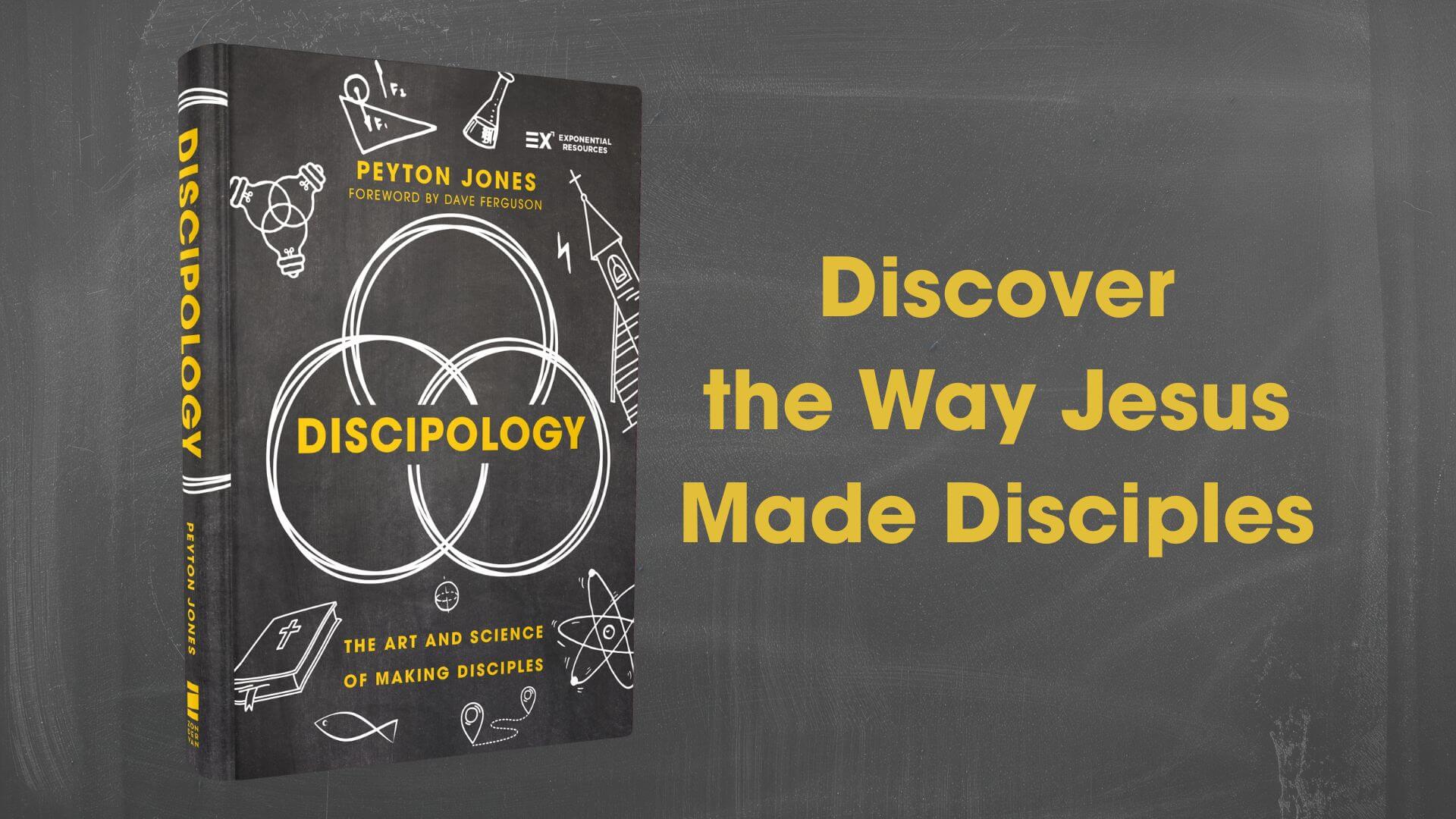
Discipology exists because disciple making is powerful, but rarely fast. The system is designed to help leaders and everyday believers stay engaged in the long work of formation, walking with others beyond short programs and quick wins. You can learn the ropes quickly, but seeing results can take longer.
Because some of the most transformative fruit doesn’t show up in months. It shows up in years.
Click here to Pre-Order Discipology. https://newbreedtraining.com/resources/books/discipology/