The Discipology of Jesus: Why We Needed a New Word
By Peyton Jones
Sometimes the hardest problems to solve are the ones we think we already understand.
Discipleship is one of those words.
It is familiar. Comfortable. Frequently used. And yet, despite decades of conversation, conferences, and curriculum, disciple-making remains one of the church’s most persistent struggles. We talk about it constantly, but we rarely experience it as Jesus did.
That disconnect is not accidental. It is the result of drift. Over time, the words we use can lose their meaning. They get stretched, softened, or repurposed until they no longer point to the same reality. That is why a new word became necessary.
When Shared Language Masks Different Meanings
Most leaders use the word discipleship with good intentions. But the same word can hide very different assumptions. For some, discipleship means Bible knowledge. For others, it means spiritual disciplines. For others, it means small groups, accountability, or character formation. All of those are good things. None of them are wrong.
The problem is not that these definitions are incorrect. The problem is that they are incomplete.
When we use the same vocabulary but operate from different frameworks, progress stalls. We talk past one another. We agree in principle but diverge in practice. Eventually, the word discipleship becomes so broad that it loses its precision. That is when a term becomes broken.
The need for a new word does not arise because something novel has been discovered, but because something essential has been lost. Discipology exists to recover a framework that was hiding in plain sight.
Discipology Is Not Reinvention
Discipology is not a new method. It is not a program. It is not a branded system designed to compete in the crowded discipleship marketplace. Discipology is the study of how Jesus actually made disciples.
Too often, the church studies discipleship as an abstract concept rather than a lived practice. We analyze outcomes without examining the process. We debate theology without observing behavior.
Jesus did not leave behind a theory of disciple-making. He left behind a pattern.
Discipology seeks to uncover that pattern by paying close attention to the Gospels. It asks a simple question: What did Jesus consistently do over the course of his ministry that resulted in mobilized disciple-makers?
When we slow down and observe, a clear framework emerges.
The Three Rhythms Jesus Used
Jesus’s public ministry unfolded over three years, and each year carried a distinct emphasis. This was not accidental. It was an intentional formation.
Across those years, Jesus incorporated three core rhythms into the lives of his disciples.
Time. Teaching. Tactics.
These rhythms worked together to produce mobilization.
Jesus spent extended time with his disciples. He trained them through teaching that reshaped how they understood God, the kingdom, and themselves. And he sent them out to practice what they were learning in real-world settings.
This was not a rigid curriculum or a one-size-fits-all program. It was a relational and adaptable rhythm. Flexible enough to meet people where they were, and structured enough to move them forward.
When practiced together, these rhythms formed people who were both informed and transformed.
Patterns, Principles, and Practices
One of the reasons Jesus’s disciple-making approach has been difficult to replicate is that we often confuse methods with principles.
Methods change. Contexts shift. Cultures differ. What worked in first-century Galilee will not look identical in a modern city.
But principles endure.
Jesus modeled patterns of behavior. He taught principles that shaped thinking. And he deployed practices that allowed disciples to learn by doing.
Discipology pays attention to all three.
Patterns show us what Jesus did repeatedly. Principles help us understand why those actions mattered. Practices give us a way to embody those insights in our own context.
Rigid adherence to methods fails in the field. Anyone who has worked in emergency services knows this. You train for scenarios, but reality never unfolds exactly as planned. In those moments, principles are what guide you.
Jesus understood this. That is why he did not hand his disciples a manual. He gave them a way of life.
Why This Framework Keeps Reappearing
One of the strongest indicators that Discipology reflects something real is that others keep rediscovering the same framework.
Across denominations and movements, practitioners consistently identify three core outcomes of disciple-making. Becoming like Jesus. Thinking like Jesus. Living as Jesus lived.
Different authors use different languages. Heart, head, and hands. Be, do, and go. Formation, instruction, and mission. The labels vary. The reality does not.
This convergence is not a coincidence. Scientific laws are grounded in repeatable observation. Gravity works whether or not we understand it. Thermodynamics governs reality regardless of our preferences.
Disciple-making has a similar relationship with reality. When the church aligns with how Jesus formed people, transformation follows. When it does not, frustration sets in.
From Theorists to Practitioners
One of the quiet dangers in ministry is mistaking understanding for obedience.
It is possible to become very good at talking about disciple-making without ever doing it. Academic analysis can produce clarity without producing change.
Jesus never trained his disciples to be theorists. He trained them to be practitioners. The Gospels do not read like a textbook. They read like an immersive training environment. The disciples learned as they walked, watched, tried, failed, and tried again.
This is why Discipology emphasizes participation. You do not simply study someone else’s adventure. You step into your own. Transformation requires movement.
The Role of the Catalyst
Every disciple-making environment requires a catalyst.
A catalyst is not a hero. It is someone willing to go first.
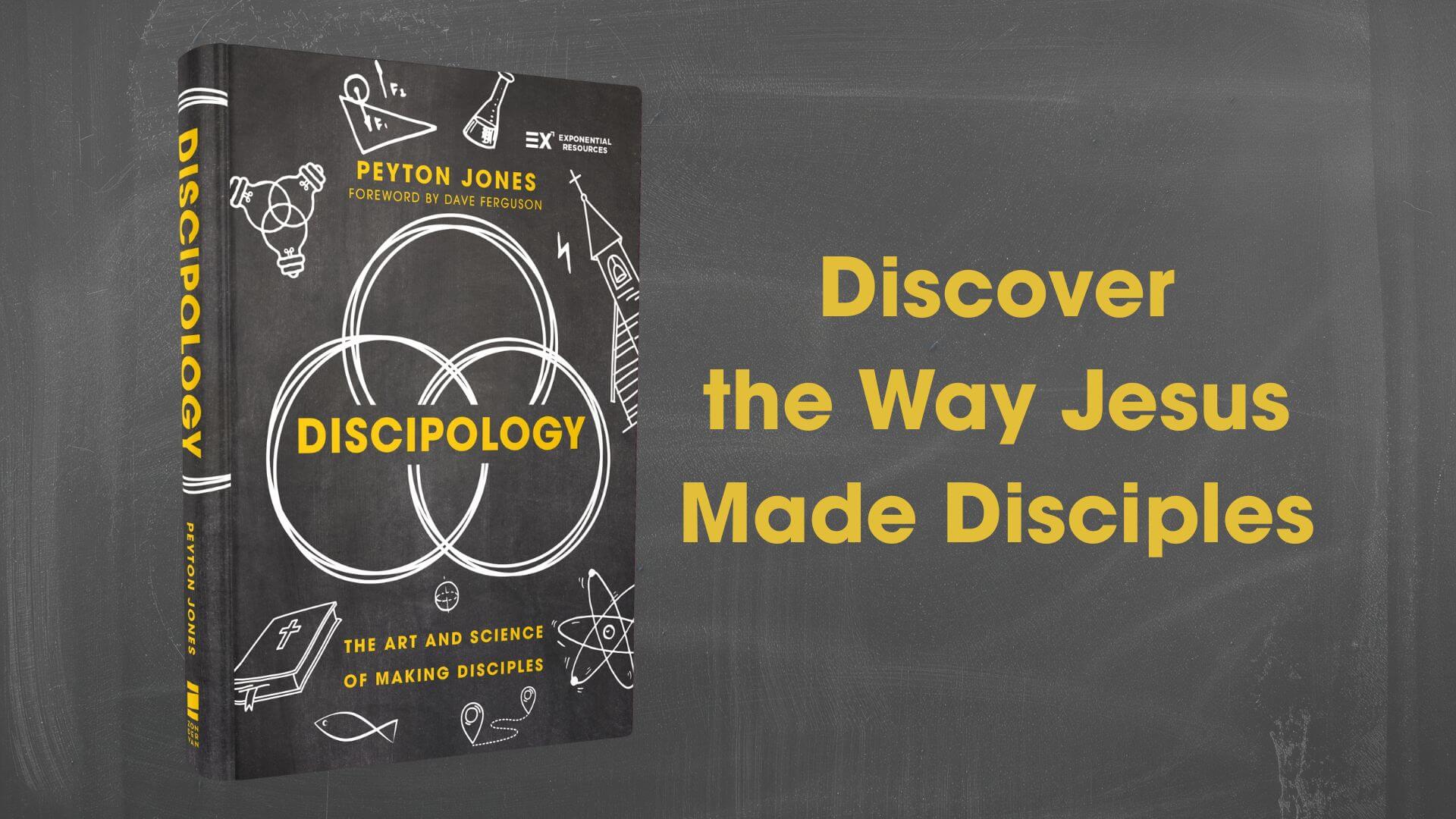
If you are holding this book, you are likely a catalyst. Not because you have it all figured out, but because you are willing to take responsibility for what happens next.
Catalysts exist at every level. Pastors. Small-group leaders. Youth leaders. Everyday believers who decide to take Jesus at his word.
Research into movements consistently highlights the role of catalytic leaders. Movements do not begin with mass adoption. They begin with a few people who are willing to practice what they believe.
Jesus started with twelve.
An Ecosystem, Not a Program
Discipology is not meant to stand alone. It functions within an ecosystem.
Jesus built an immersive environment for disciple-making. People learned in community. They processed experiences together. They encouraged one another through failure and growth.
The same is true today. Disciple-making flourishes when people walk together. When leaders model the way. When learning and practice happen side by side.
Tools can help. Resources can guide. But nothing replaces shared life.
Seeing What Was Always There
Perhaps the most important shift Discipology offers is perspective.
When you change the way you look at something, the thing you are looking at changes. Not because it has transformed, but because you are finally seeing it clearly.
Jesus’s disciple-making strategy has always been there. The problem is not absence. It is neglect.
Discipology exists to help leaders see again, to recover the way Jesus formed and mobilized ordinary people to change the world.
The dilemma named in the first chapter demands an answer. Chapter two of Discipology points us toward it.
The only place left to turn is Jesus himself.
If the framework in this chapter resonates, the rest of Discipology walks through it in practice.
The book traces how Jesus formed disciples through time, teaching, and tactics, and how those same rhythms can mobilize everyday believers today. This chapter reframes how we understand disciple-making. The chapters that follow show how Jesus actually did it.